

Writing for the web - why does it matter?
Because people read stuff on the web differently than in print.
Top tips
Here are five things I look for when writing content for the web:
Put the useful answer first. Tell the reader what they need to know before adding background and detail.
Use their language. Explain unfamiliar terms and choose specific words over impressive-sounding phrases (use bitesize text so the content is more manageable).
Make the action clear. Say who does what, especially when you want the reader to take a next step.
Break up the text where the idea changes. Short paragraphs help people scan, but there is no fixed number of lines that works on every screen. (I write short sentences and paras of five lines - and break these up with a dash instead of a semi-colon.)
Use descriptive headings, useful lists and clear link text. A reader should be able to find their way through the page without reading every word.
Read it as a customer
Before publishing, read the page as someone who doesn’t know your business. Can you tell what it is about, find the answer you came for and see what to do next? Check it on a phone too. A paragraph that looks short on your laptop can feel quite different on a small screen.
LinkedIn post
I posted the list above on LinkedIn and asked my followers to share their top tips.
Graphic Designer Drew Hughes shared his expertise:
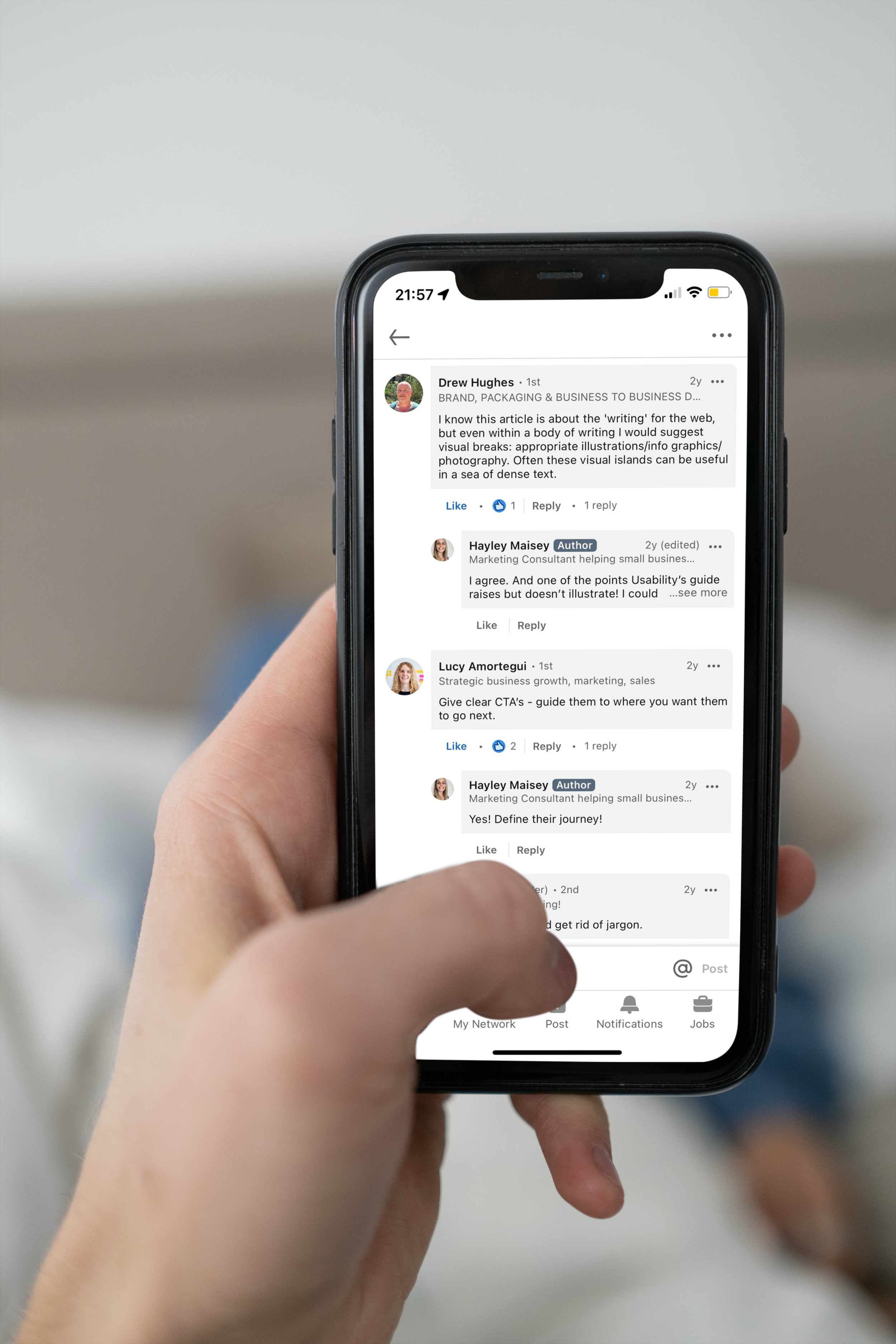
“I know this article is about the 'writing' for the web, but even within a body of writing I would suggest visual breaks: appropriate illustrations/info graphics/photography. Often these visual islands can be useful in a sea of dense text.”
I agree. A relevant image can help explain an idea or give the reader a useful visual pause. It still needs to earn its place; the words around it should make sense too.
Strategic Consultant Lucy Amortegui shared her top tip:
“Give clear CTA’s - guide them to where you want them to go next.”
Yes! You want to define the journey that the reader is on.
Instructional Designer Stevi Page recommended you:
“Use plain English and get rid of jargon.”
Agreed! It’s really important to make your message clear and use language that everyone can understand.
I actually find this difficult to do as I sometimes get wrapped up in my own specialism, and yet as a Marketer I’m often asked to translate content into something everyone gets. I assume this may be the case for other people.
What does clearer copy look like?
Imagine a training provider describing its programmes. “We deliver bespoke solutions that empower professional excellence” sounds busy, but doesn’t tell you much.
“We help new managers prepare for difficult conversations through practical training programmes” gives the reader an audience, a subject and a format. They can start to judge whether it is relevant to them.
Once the message is clear, give the reader a useful next step, such as viewing the workshop outline. If you’re still deciding what the page needs to say, start with planning effective content.
What else?
What else would you recommend to help write user-friendly content? And do you agree with the tips I’ve recommended?